How to build a website like Bark.com
Bark.com transformed local service discovery by connecting customers with professionals through a lead marketplace model. Learn how to build a similar platform with smart matching, lead generation, and trust features that serve both service providers and customers.
Published: Aug 9, 2024
Last updated: Sep 11, 2026
Bark.com turned service shopping into a request-and-respond system: describe what you need once, and let qualified professionals come to you. It's a model that works because it solves a real, expensive problem for both sides of a stubbornly offline market. This guide breaks down how Bark.com actually operates, what it would take to build a competing lead marketplace in 2026, and where the real opportunities for a new entrant sit.
What is Bark.com and how does it work?
Bark.com is a lead generation marketplace that connects customers looking for local and professional services with providers who pay to contact them. Founded in 2014 by Andrew Michael and Kai Feller in the UK, Bark now operates across eleven markets including the UK, US, Australia, Canada, and Germany, covering over 1,000 service categories, from wedding photographers and life coaches to tax accountants and dog walkers (Bark press release). Bark.com Ltd's UK company filings show the business operates at substantial scale, built almost entirely on providers paying to contact customers rather than customers paying to find providers.
The mechanics are simple by design. A customer fills out a structured request form describing their project, budget, and timeline. Bark's system distributes that request to a shortlist of relevant providers, typically up to five, who can purchase credits to respond directly. The customer compares responses and chooses who to work with, entirely off-platform. Bark never touches the transaction itself; it only brokers the introduction. That single design decision, no payments, no project management, shapes almost everything else about how the business runs.
How Bark.com makes money
Bark's core revenue engine is a credit system. Providers buy credit packages, then spend credits to unlock contact details and respond to customer requests that match their profile. Credit prices vary by category and competitiveness, with a single lead typically costing 5 to 20 credits, or roughly £7 to £40, with premium categories like wedding photography or high-end contracting priced well above emerging or low-competition niches (NobleLeads). Because customers never pay to post a request, the entire monetization burden sits on the supply side, and Bark's growth strategy has always centered on maximizing request volume to make provider credit spend worthwhile.
A secondary layer comes from provider subscriptions. Paying members get benefits like enhanced profile placement, more visibility in search results, additional response credits, or lower per-lead pricing. This subscription layer smooths Bark's revenue against the lumpiness of pay-per-lead purchasing and gives serious providers, the ones treating Bark as a primary acquisition channel, a reason to commit longer term rather than buying credits reactively.
Bark has reportedly tested customer-facing fees over the years but has consistently returned to a free-to-post model, because request volume is the input that makes the whole credit economy function. Fewer requests mean providers get less value per credit spent, which erodes the willingness to keep buying credits. This is the central tension every lead marketplace has to manage: keep the demand side frictionless enough to generate volume, while extracting enough value from supply to run a real business.
What makes Bark.com work: key features
Granular, structured request forms. Bark doesn't ask "what service do you need?" It asks category-specific questions, wedding photography requests get different fields than tax preparation requests, which produces higher-quality leads and lets providers judge fit before spending a credit.
A deep, specific category taxonomy. Bark's three-tier category structure (broad category, subcategory, specific service) is what makes matching precise. A landscaper and a lawn-mowing service aren't competing for the same leads, even though a flatter taxonomy would lump them together.
Batch distribution to a limited provider set. By capping the number of providers who see any given request (commonly up to five), Bark keeps competition high enough to be meaningful without flooding customers with dozens of responses, which would erode response rates and provider ROI.
Credit-based access control. The credit system is the entire business model. It gates access to customer contact information, creates a natural cap on provider volume per lead, and lets Bark price categories differently based on demand and lead value.
Portfolio-driven provider profiles. Because Bark doesn't manage the transaction, the profile has to do the selling. Photo portfolios, past reviews, and detailed service descriptions substitute for the trust that a managed checkout would otherwise provide.
Review collection despite no transaction data. Bark has to manually solicit reviews via follow-up outreach since it has no purchase record to trigger them automatically. It's a structural weakness of the lead model, and one worth designing around if you're building a competitor.
The competitive landscape
Bark competes with a handful of platforms that address the same underlying need, "find a trustworthy professional fast", through meaningfully different mechanics.
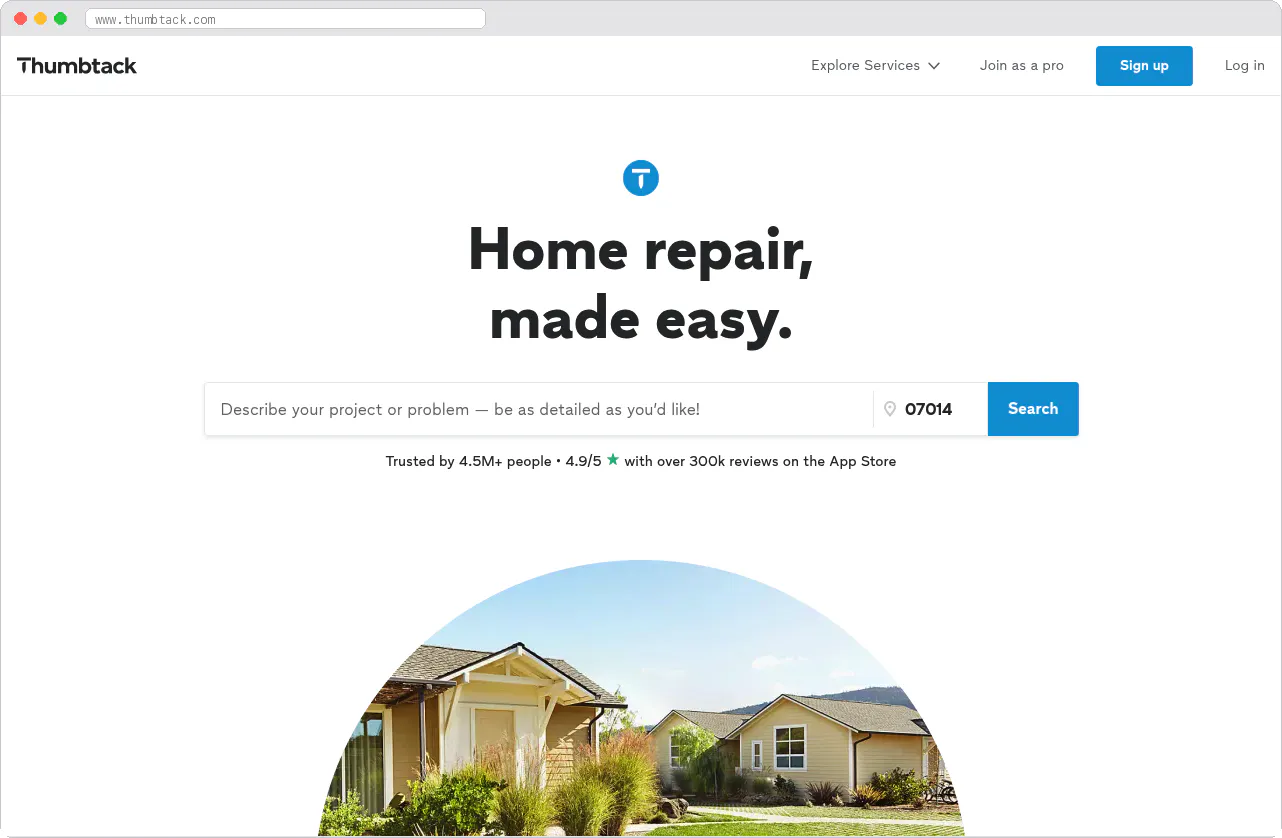
Thumbtack is Bark's closest US analog and has raised nearly $700 million in venture funding (Tracxn). It leans harder into instant, fixed-price matching for commodity services like house cleaning or lawn care, letting customers book immediately rather than waiting for provider responses. That works well for standardized jobs but is a weaker fit for consultative, high-variance work like custom furniture building or brand strategy, exactly the space where Bark's slower, response-based model does better. The opening for a new entrant is any category where jobs are too complex for instant pricing but too fragmented for Thumbtack's algorithm to serve well.
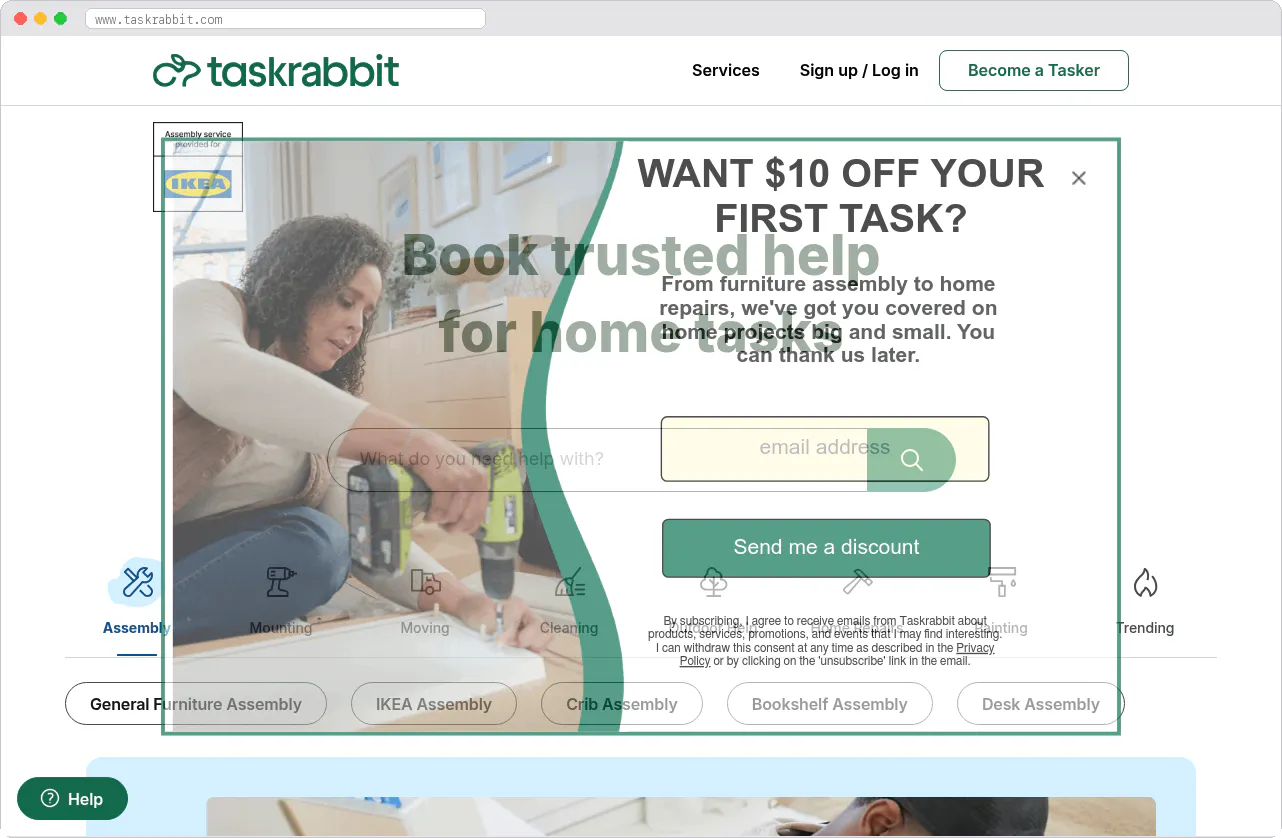
TaskRabbit takes a different structural approach entirely: it manages the full transaction, including payment and basic insurance, rather than operating as a pure lead broker. That makes it a booking platform more than a lead marketplace, and it's positioned around small, immediate tasks (furniture assembly, moving help, minor repairs) rather than larger projects requiring quotes and negotiation. Its transaction-based revenue model gives it dispute resolution and guarantee capabilities Bark structurally can't offer, but it doesn't serve the higher-consideration, higher-ticket service categories where Bark thrives.
Angi (formerly Angie's List, merged with HomeAdvisor) combines a legacy review database with lead generation and, increasingly, financed project bookings. Its moat is trust built over two decades of homeowner reviews, which is genuinely hard to replicate quickly. But Angi's lead fees are notoriously expensive for contractors, and its category focus is narrow (home improvement only), which leaves an opening for anyone building a Bark-style model in professional services, creative work, or personal services categories Angi never touches.
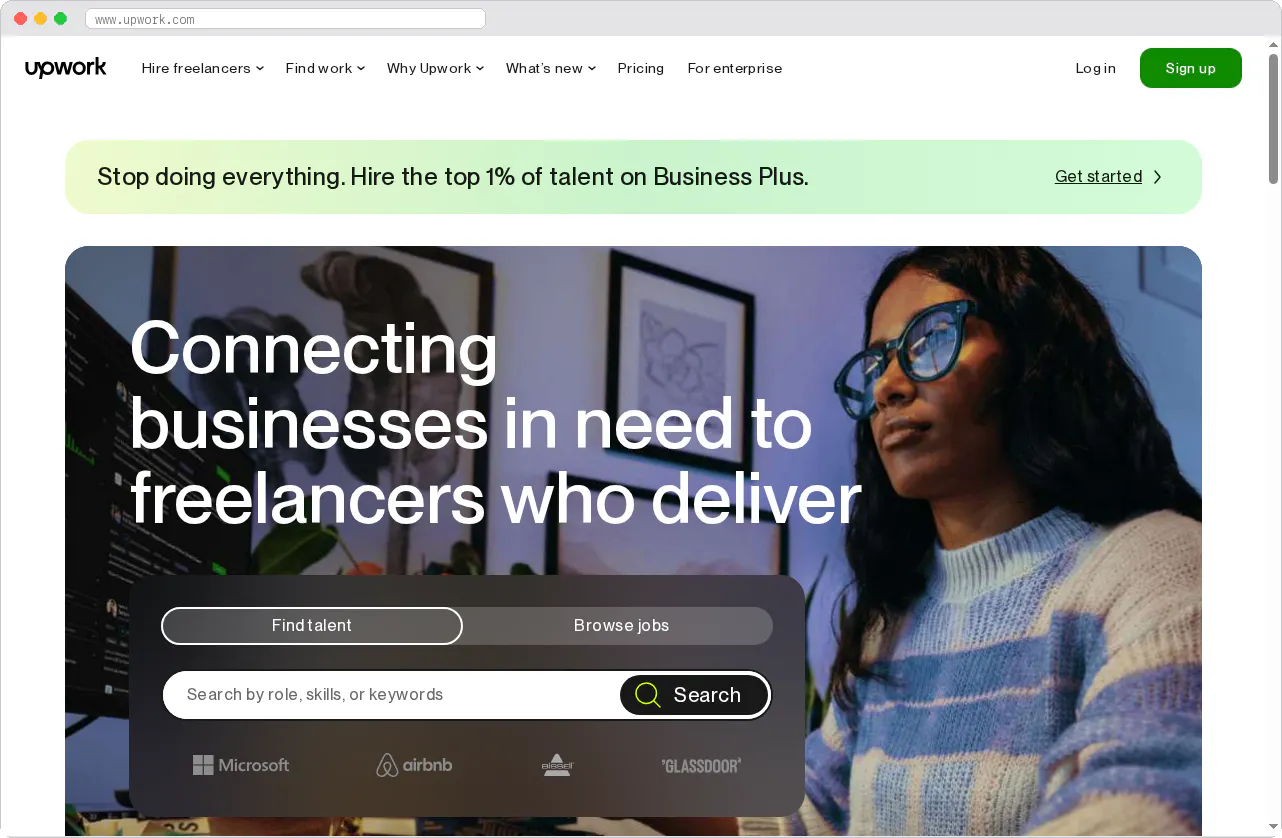
Upwork operates a hybrid model, lead-style bidding combined with full contract, payment, and time-tracking management, in the freelance and remote work space. Its skills testing and work-history verification show what's possible when a marketplace needs to prove competency for knowledge work rather than local trades. Upwork's weakness is that it's built for remote digital work; it does nothing for local, in-person services, which is Bark's entire market.
HomeAdvisor (now folded into Angi Pro) pioneered aggressive lead-fee-based contractor matching with heavy screening: background checks, license verification, insurance requirements. That vetting builds trust but also makes HomeAdvisor's lead costs among the highest in the industry, a pain point contractors frequently cite, and a clear price-sensitivity opening for a leaner, less bureaucratic competitor.
Across all five, the pattern is consistent: no platform has fully nailed both low-friction demand generation and consultative, high-trust matching at the same time. That gap is where a focused Bark-style competitor has room to compete.
How to build a marketplace like Bark.com
1. Define your niche within Bark's category
Bark's breadth, over 1,000 categories, is also its weakness. Generalist platforms struggle to build deep matching intelligence or category-specific trust signals for every vertical simultaneously. Pick a niche where you can out-specialize Bark: a single vertical (wedding services, home renovation, executive coaching), a geography Bark under-serves, or a customer segment (enterprise, luxury, budget) it treats generically. The best niches share three traits: a fragmented provider landscape, high individual customer acquisition costs for providers, and service complexity that rewards detailed matching over instant pricing.
2. Validate demand and willingness to pay
Before building anything, confirm two things independently: that customers in your niche will actually fill out a detailed request form instead of just Googling, and that providers will pay for leads rather than relying on referrals and word of mouth. Talk to 15-20 providers directly and ask what they currently spend on customer acquisition. If they're already paying Google Ads or Angi for leads, you have a validated willingness to pay; you just need to prove you can deliver better leads for less.
3. Design your matching and credit model
Decide upfront how leads get distributed (batch to multiple providers, like Bark, or exclusive single-provider matches, which command higher prices but lower volume) and how you'll price access. A simple starting model: flat credit pricing per category during your first few months, refined into demand-based pricing once you have real conversion data. Overbuilding this before you have transaction volume is a common early mistake; simple and adjustable beats sophisticated and premature.
4. Choose your development approach
Vibe coding from scratch. AI tools like Cursor, Lovable, and Bolt can produce a working Bark-style prototype, request form, provider list, basic messaging, quickly. For pressure-testing a concept or demonstrating it to early providers, that's genuinely useful. For handling real credit purchases and real customer contact data, it's probably not sufficient. What vibe-coded outputs reliably don't produce is the infrastructure underneath: secure payment handling, fraud prevention, and abuse controls (like preventing providers from harvesting contact details without paying). A documented Sharetribe experiment ran 60+ hours to reach demo quality but revealed a critical checkout exploit that would have allowed price manipulation via a direct API call. Bringing that output to production standard takes significant additional time and a solid grasp of how the underlying systems fit together. Useful for a demo, not a cost-effective path to launch.
Custom development from scratch. Hiring developers gives you full control over the matching logic and credit system. A Bark-style lead marketplace with structured requests, provider profiles, credit purchasing, and messaging is a Tier 1-to-2 build: a simple MVP runs $30,000-$80,000 over 8-20 weeks, while a version with identity verification, review systems, and dispute handling for credit disputes moves into $80,000-$200,000 over 16-28 weeks (Codica, RaftLabs). The low end assumes offshore development teams at $15-40/hour; US or Western European teams push toward the top of each range. This makes sense once you have matching logic or industry integrations no existing platform can support.
Building on a marketplace operating system like Sharetribe. You start at roughly 90% done on the foundation, user accounts, listings, messaging, notifications, payments infrastructure, and put your effort into the parts that make your lead marketplace distinct. Three paths within this approach:
- No-code builder. Configure request-style listings, category-specific forms, provider profiles, and messaging flows directly in the Console. This gets a functioning request-and-respond marketplace live in weeks, without writing a line of code.
- AI-assisted development. Connect Claude Code, Cursor, or Codex to Sharetribe's open APIs and open-source template to build custom matching logic, credit balance tracking, or category-specific intake forms. Because Sharetribe already handles the payment infrastructure, this carries much lower risk than building the credit system from scratch.
- Custom code. Build directly on the developer platform for deeper integrations (CRM sync, background check APIs, custom scoring models), or hire from Sharetribe's Expert Marketplace for specialized work.
Most founders start with the no-code builder, validate that the request-and-respond model works in their niche, then layer in AI-assisted or custom features as real usage data tells them what matters.
5. Solve the cold start problem
A lead marketplace's cold start is asymmetric: customers won't submit a detailed request into an empty platform, but providers won't pay for leads that don't yet exist. Bark solved this early by recruiting providers first, specifically ones already spending money on other lead-generation channels, and giving them free or discounted credits to build supply density before actively marketing for customer demand. Once providers were in place, Bark could confidently drive customer acquisition knowing requests would get real responses.
For a new entrant, three tactics work well. First, go supply-first in a tightly defined geography or category, recruit 20-30 responsive, high-quality providers before launching any customer-facing marketing. Second, seed initial demand manually: post real requests yourself, sourced from friends, forums, or local groups, to prove the platform generates activity. Third, resist the urge to launch broad. A tightly focused launch (one city, one category) that reliably produces good matches beats a wide launch that produces mediocre ones everywhere; mediocre early matches kill provider trust fast, and it's difficult to win it back.
6. Launch and iterate on conversion
Launch with the smallest feature set that proves your core loop: request submitted, provider notified, provider responds, customer chooses. Everything else, advanced filtering, subscription tiers, review automation, can wait. Track three numbers relentlessly from day one: request-to-response rate, response-to-hire rate, and provider credit-to-conversion ratio. These tell you whether your matching quality is actually good enough to retain paying providers.
7. Optimize matching and provider success
Once you have real transaction volume, invest in improving match precision and provider response rates. Poor matches burn provider credits without producing hires, which is the fastest way to lose supply-side trust. Give providers concrete guidance, response time benchmarks, profile completeness tips, competitive credit-bidding strategies, since provider success directly drives your retention and repeat credit purchases.
Do you need to build everything Bark.com has?
No. Bark.com's 1,000+ categories, decade of review data, and sophisticated matching algorithm are the product of over ten years of iteration, not a launch requirement. At launch, you need a structured request form, provider profiles with basic portfolio support, a simple credit or lead-access mechanism, and messaging. That's it. Everything else, dynamic credit pricing by demand, machine-learned matching, subscription tiers, is a scaling feature, not a validation feature.
The instinct to "just vibe-code a Bark clone" is understandable but usually costs more time than it saves. Even with modern AI tools, building secure credit purchasing, fraud-resistant lead access controls, and reliable notification systems from zero takes real engineering discipline, discipline that vibe-coded prototypes typically skip in the interest of speed. Starting on a foundation like Sharetribe means the payment and account infrastructure is already handled and audited, so the AI tokens and developer hours you do spend go directly toward what actually differentiates your platform: your matching logic, your niche-specific request forms, your credit pricing model, not rebuilding a login system.
Trust and safety for a Bark.com-type marketplace
Lead marketplaces carry a specific trust risk: customers hand over contact information and project details before any vetting has happened, and providers pay money for access before knowing if the lead is real. Fake or low-intent requests waste provider credits and erode trust fast; fake or unqualified providers waste customer time and can create real safety concerns for in-home services. Both sides need protection, and neither gets it automatically the way a managed-transaction platform does.
Standard practices in this space include phone or email verification for every customer request (to filter out bots and low-intent submissions), business registration or license verification for providers in regulated categories, and visible review or rating history before a provider can access premium leads. For categories involving in-home work, background checks and insurance verification are increasingly table stakes, not differentiators.
Sharetribe provides user accounts with optional identity verification, structured transaction flows you can adapt for request-and-response models, and built-in messaging with abuse reporting out of the box. What you'll need to add yourself is category-specific verification (license lookups, background check integrations) and any credit-fraud prevention logic specific to how you price and gate lead access. These are typically light integration work rather than ground-up builds.
Running a marketplace like Bark.com
Day-to-day operations for a lead marketplace center on three things: category and taxonomy maintenance, provider quality monitoring, and credit pricing adjustments. Bark, at its scale, runs dedicated teams for provider success, fraud monitoring, and category expansion, none of which you need to replicate on day one. Early on, most of this can be a single founder reviewing flagged requests, checking in with top providers, and manually adjusting credit prices in underperforming categories.
Sharetribe handles the operational load that would otherwise consume your time: user account management, payment processing infrastructure, notification delivery, and the transaction data layer that shows you what's actually happening in your marketplace. That leaves your attention free for the parts that actually require judgment, provider recruitment, category curation, and pricing strategy, rather than infrastructure maintenance.
Development costs and timeline
Three realistic scenarios:
Vibe coding from scratch: Free or very cheap to start. A working Bark-style prototype, request form, provider list, basic messaging, is buildable in a weekend with AI tools. What you can't get from here is a production-ready platform: secure credit purchasing, contact-detail access controls that resist scraping or abuse, and fraud detection for fake requests all require engineering work that AI coding tools don't shortcut. A documented Sharetribe experiment logged 60+ hours to reach demo quality and still surfaced a critical payment vulnerability. Useful for proving a concept to yourself or early users, not a cost-effective path to a live business.
Custom development from scratch: A simple Bark-style MVP, request forms, provider profiles, basic credit purchasing, and messaging, sits in the Tier 1 range: $30,000-$80,000 over 8-20 weeks. Add identity verification, dispute handling for credit refunds, and a mature review system, and you move into Tier 2: $80,000-$200,000 over 16-28 weeks (Codica, RaftLabs). The low end assumes offshore teams; US or Western European developers push costs toward the top. Ongoing maintenance typically runs 15-25% of the original build cost per year on top of hosting. This route makes sense once you have matching or verification requirements no existing platform can support.
Building on Sharetribe: Subscription pricing starts at $99/month on the Lite plan, $199/month on Pro, and $299/month on Extend, all billed yearly. This covers the account system, listings and search, messaging, notifications, and payment infrastructure a Bark-style marketplace needs from day one. Most founders reach a live MVP in weeks, not months, and any credit-system or matching customization gets added narrowly via the no-code builder, AI-assisted development, or a developer, because the transaction engine underneath is already built and tested.
Why Sharetribe for building a marketplace like Bark.com
Sharetribe's transaction flow engine adapts naturally to a request-and-response model: a customer "listing" becomes a service request, and provider responses map onto Sharetribe's proposal and messaging system. The platform's flexible data schema lets you build Bark's category-specific intake forms (different fields for wedding photography versus tax prep) without custom backend work, and its user profile system supports the portfolio-heavy provider pages that lead marketplaces depend on for trust. Payment infrastructure is built in from day one, so whether you charge providers via credits, subscriptions, or a hybrid, you're configuring an existing system rather than building one, which is precisely the part of a Bark clone that's hardest to get right on your own.
Frequently asked questions
How much does it cost to build a website like Bark.com?
A no-code build on Sharetribe starts around $99-$299/month in subscription costs plus setup time, letting you launch an MVP for a few thousand dollars in the first year. Custom development runs $30,000-$80,000 for a simple version or $80,000-$200,000 with verification, escrow-style credit handling, and dispute flows (Codica, RaftLabs). The right choice depends on how much custom matching logic your niche actually requires.
What business model does Bark.com use?
Bark.com uses a lead generation model where customers post service requests for free and providers pay credits, typically around £7-£40 per lead depending on job size and service type, to contact them (Bark.com). Additional revenue comes from provider subscriptions that unlock better visibility and pricing. This differs from booking platforms like TaskRabbit, which take a cut of the actual transaction.
What's the difference between Bark.com and Thumbtack?
Bark uses batch notification, sending a request to a handful of providers who respond individually, while Thumbtack leans more heavily on instant, fixed-price matching for standardized jobs. Bark tends to work better for consultative, higher-ticket services; Thumbtack works better for commodity tasks with predictable pricing. Both charge providers for leads rather than charging customers.
Can I build a niche version of Bark.com for one industry?
Yes, and it's usually the smarter starting point. Bark's breadth across 1,000+ categories makes it hard for the platform to build deep trust signals in any single vertical, which leaves room for focused competitors in categories like home renovation, creative services, or B2B consulting to out-match it with better category-specific forms and vetting.
How do I get providers to trust a new lead marketplace?
Early trust comes from selectivity, recruit a small number of genuinely responsive, high-quality providers rather than opening signups broadly, and be transparent about lead pricing and refund policy for bad-fit requests. Fast, visible early wins (a provider getting hired from your platform within their first week) do more to build trust than any marketing claim.
How long does it take to launch a Bark-style marketplace?
With a no-code platform like Sharetribe, a functional MVP with request forms, provider profiles, and messaging can launch in a few weeks. Custom development typically takes 8-20 weeks for a simple version, longer if you're adding verification or complex matching logic from the start. The bottleneck is usually provider recruitment and validating your niche, not the software build itself.
Start your 14-day free trial
Create a marketplace today!
- Launch quickly, without coding
- Extend infinitely
- Scale to any size
No credit card required