How to build a website like Daraz (2026 guide)
Daraz dominates South Asian e-commerce with localized payment methods, mobile-first design, and seller support programs. Learn how to build a similar multi-vendor marketplace that serves emerging markets effectively.
Published: May 21, 2025
Last updated: Sep 11, 2026
What is Daraz and how does it work?
Daraz is South Asia's largest multi-vendor e-commerce marketplace, operating in Pakistan, Bangladesh, Sri Lanka, Nepal, and Myanmar. Rocket Internet founded the company in 2012, and Alibaba Group acquired it in 2018 for roughly $200 million, folding it into Alibaba's cross-border e-commerce strategy (TechJuice). The platform now connects more than 100,000 active sellers with tens of millions of buyers across five countries with very different infrastructure, languages, and payment habits.
Daraz works like a classic multi-vendor marketplace: sellers list products across categories from electronics to fashion to groceries, buyers browse and order through the app or website, and Daraz coordinates payment, delivery, and customer service in between. What makes it distinct is how much of that coordination happens outside a browser. Cash-on-delivery still accounts for a large share of transactions in several of its markets (ProPakistani), and Daraz built its own logistics arm, Daraz Express, specifically to handle last-mile delivery and cash collection in regions where third-party couriers don't reach reliably.
How Daraz makes money
Daraz earns commission on every sale, with rates typically ranging from about 2% to 8% depending on category. Fashion tends to sit at the upper end of that range, while lower-margin, price-competitive categories like electronics and groceries carry thinner take rates (Shipturtle). This commission structure is the core of the business: Daraz doesn't hold inventory itself, so its revenue scales directly with the volume of transactions it facilitates.
A second layer comes from advertising and placement. Sellers pay for sponsored listings, homepage banners, and enhanced visibility during mega sales events like Daraz's 11.11 and 12.12 campaigns, which function similarly to Alibaba's own shopping festivals. These paid placements are increasingly important as Daraz's category count grows and organic discovery becomes harder for individual sellers to win.
The third revenue stream is logistics and fulfillment. Daraz Express charges sellers for storage, packing, and delivery, giving sellers who don't want to manage their own shipping a turnkey option. Because cash-on-delivery requires physical cash collection and reconciliation, this logistics layer isn't just a convenience fee, it's infrastructure Daraz built because no regional courier network could support the model at the scale Daraz needed.
What makes Daraz work: key features
Cash-on-delivery as a first-class payment method, not an afterthought. In markets where credit card penetration is low, most Western marketplace software treats COD as an edge case. Daraz built its checkout, fulfillment, and reconciliation flows around it, including delayed payment settlement for sellers and cash-collection logistics baked into delivery routes.
Mobile-first, low-bandwidth design. With the large majority of South Asian internet users relying on mobile connections rather than fixed broadband, often on lower-end devices and slower networks (GSMA), Daraz optimized image loading, app size, and checkout flows for conditions that a typical US or European e-commerce team never has to design for.
Multi-language, multi-market localization. Daraz supports Urdu, Bengali, Sinhala, Burmese, and other regional languages, along with country-specific catalogs, pricing, and promotions. This isn't just translation, it's separate operational playbooks for five markets with different regulatory and logistics environments.
Daraz Express, a proprietary logistics network. Rather than relying entirely on third-party couriers, Daraz built delivery infrastructure that reaches areas standard logistics providers skip, and handles the cash-collection step that COD requires.
Seller education at scale, through Daraz University. Many sellers on Daraz are small businesses with no prior e-commerce experience. Free training on photography, inventory management, and digital marketing turns first-time sellers into reliable, professional-grade merchants, which directly improves buyer experience.
Gamified engagement and livestream shopping. Features like in-app rewards and livestream selling events blend entertainment with commerce, a pattern borrowed from Chinese e-commerce that proves effective with younger South Asian shoppers who spend more time in-app than on search-driven shopping.
The competitive landscape
Flipkart dominates Indian e-commerce with a similar playbook: local payment integration (particularly UPI), private-label products, and heavy logistics investment. Walmart's $16 billion acquisition of Flipkart validated the model. Where Flipkart falls short of Daraz's approach is breadth across markets. It's essentially a single-country play, which means its localization depth in India is hard to match, but it offers no blueprint for founders targeting multiple smaller, fragmented markets the way Daraz does.
Tokopedia built its business in Indonesia around small-seller empowerment and social commerce, later merging with Gojek to form a super-app ecosystem spanning ride-hailing, food delivery, and payments. Its strength is deep integration with everyday consumer habits. Its weakness, from a new entrant's perspective, is that the super-app model requires capital and regulatory relationships far beyond what a focused marketplace needs, which leaves room for leaner, category-specific players to compete on service quality alone.
Amazon brings unmatched logistics technology and global scale, but it has struggled in South Asia specifically because its standardized global playbook doesn't flex for cash-on-delivery-heavy, seller-education-dependent markets. That gap between Amazon's operational excellence and its local underperformance is exactly the opening Daraz exploited, and it remains open for any founder willing to combine Amazon-grade fulfillment thinking with genuine local adaptation.
Shopee competes hard in Southeast Asia through aggressive gamification, livestream shopping, and an offline seller-recruitment strategy that includes physical training centers. It's arguably ahead of Daraz on social and entertainment features. Where it's vulnerable is depth of trust infrastructure in newer markets, its rapid expansion sometimes outpaces its ability to build the seller-support systems that make marketplaces sticky over years, not just launch quarters.
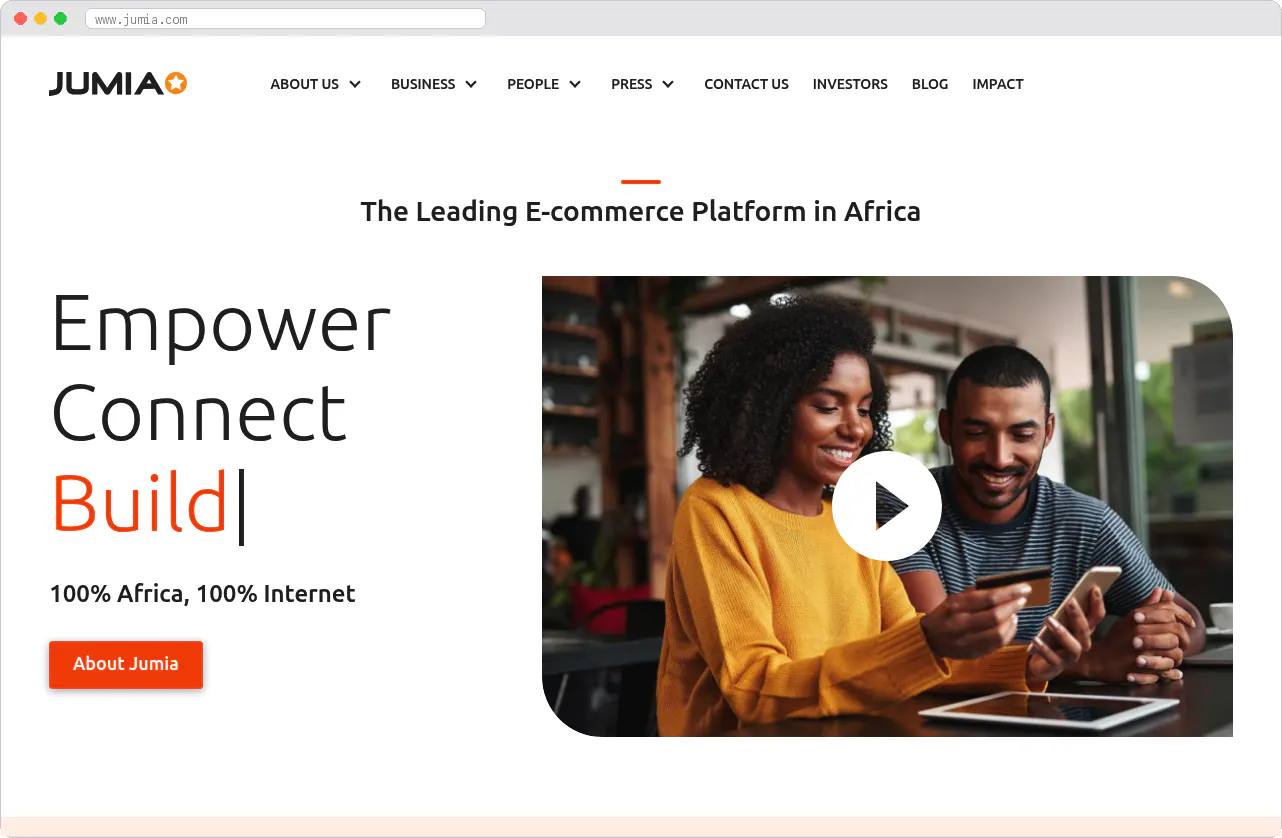
Jumia applies the same emerging-market playbook across multiple African countries, dealing with even more fragmented logistics and payment infrastructure than Daraz. Its strength is proof that the model generalizes well beyond South Asia. Its struggle has been profitability at scale, a reminder that the operational cost of building physical logistics networks in underserved regions is real and doesn't disappear just because the marketplace model works.
Adjacent to all of these are category-specific players (fashion resale apps, grocery-only delivery apps, B2B wholesale marketplaces) that don't compete head-on with Daraz's breadth but peel off specific buyer segments by going deeper on one vertical than a horizontal marketplace ever will. That's usually the more realistic starting point for a new founder than trying to out-Daraz Daraz.
How to build a marketplace like Daraz
1. Define your niche within Daraz's category
You are not building a five-country, every-category marketplace on day one. Daraz didn't either, it started narrow and expanded market by market and category by category over years. Pick a specific wedge: a single country or region, a single product category (electronics, fashion, groceries, home goods), or a specific underserved buyer segment within a market Daraz or its competitors serve poorly. The tighter the wedge, the easier every later step becomes.
2. Validate demand before building anything
Talk to real buyers and sellers in your target niche about how they currently transact, what payment methods they trust, and what stops them from buying or selling online today. If cash-on-delivery, informal WhatsApp-based selling, or trust concerns dominate the conversation, that tells you what your platform absolutely must solve. Consider running a manual version first, matching a handful of buyers and sellers by hand, before writing a line of platform code or configuring a single listing.
3. Choose your development approach
Vibe coding from scratch. AI tools like Cursor, Lovable, and Bolt can produce a working Daraz-style prototype quickly. For pressure-testing a concept or demonstrating it to early users, they're genuinely useful. For launching a platform that handles real money between strangers, they're probably not sufficient. What vibe-coded outputs reliably don't produce is the infrastructure underneath: payment escrow, dispute resolution, fraud detection, and compliance. A documented Sharetribe experiment ran 60+ hours to reach demo quality but revealed a critical checkout exploit that would have allowed price manipulation via direct API call. Bringing the output to production standard requires significant time, testing, and a clear understanding of how the different components of a web application fit together. A useful prototyping tool, not a cost-effective path to launch.
Custom development from scratch. Hiring developers (who will likely use AI heavily) gives you full control. A Daraz-style marketplace with multi-vendor listings, cash-on-delivery handling, reviews, and dispute resolution sits at the production-grade tier: $80,000–$200,000 over 16–28 weeks (Codica, RaftLabs). If you add proprietary logistics coordination or real-time delivery tracking, expect to move toward the $150,000–$350,000+ tier. The low end of each range assumes offshore teams at $15–40/hr; US or Western European teams push toward the top. Makes sense when you have requirements no existing platform can meet, such as deeply custom logistics routing.
Building on a marketplace operating system like Sharetribe. You start at roughly 90% done on the standard marketplace foundation: payments, user accounts, listing management, messaging, transaction flows, fraud detection, and compliance. Your time and budget go toward Daraz-specific features like COD workflows, seller onboarding education, or regional payment integrations. Three paths within this approach:
- No-code builder. Configure multi-vendor listings, categories, commission rates, and manual payment methods (for COD-style flows) directly from the Console. This gets a founder targeting a specific region or category to a live, working marketplace without writing code.
- AI-assisted development. Connect Claude Code, Cursor, or Codex to Sharetribe's open APIs and open-source template to build region-specific features: a mobile wallet integration, a seller education portal modeled on Daraz University, or custom order-splitting logic for multi-vendor carts. Because Sharetribe handles the payment infrastructure, AI-assisted development on top of it carries much lower risk than building from scratch.
- Custom code. Build directly on the developer platform for deeper integrations like local courier APIs or Islamic banking compliance, or hire from Sharetribe's Expert Marketplace for a team that has done this before.
Most founders start with the no-code builder, then add features via AI or a developer as they learn what their users actually need.
4. Solve the cold start problem
Every multi-vendor marketplace faces the same chicken-and-egg problem: buyers won't show up without sellers, and sellers won't join without buyers. In an emerging-market context this is harder, because you're also introducing many first-time online shoppers and first-time online sellers to the entire concept of e-commerce at once. Daraz solved this early on by focusing intensely on one country at a time, recruiting sellers with hands-on onboarding support (which became Daraz University), and building physical trust touchpoints like Daraz Stores where customers could see products and pay in person before trusting the app alone.
For a new entrant, three tactics work well. First, go supply-first in a narrow niche: recruit 20-50 quality sellers in one city or category before opening buyer signups, so the first buyers who arrive see a marketplace that already looks alive. Second, seed a specific community or geography rather than trying to cover a whole country, a single city or a single product vertical is far easier to make feel dense and trustworthy. Third, consider manual matching in the earliest weeks: personally connect buyers with the right sellers via WhatsApp or phone, then automate that matching once you understand the pattern. Launching small and tight, with real transactions happening every day in a limited scope, beats launching broad with a marketplace that looks empty everywhere.
5. Design payment flows for local trust, not global convention
Cash-on-delivery, mobile wallets, and installment payments matter more in many South Asian and African markets than credit card checkout. Decide early which local payment methods are non-negotiable for your launch market, and design your transaction flow (including delayed settlement for COD orders) around that reality rather than bolting it on later.
6. Launch with hand-picked sellers and iterate publicly
Recruit your first cohort of sellers personally rather than opening signups to anyone. Work closely with them on listing quality, response times, and order fulfillment so your first hundred buyer experiences are genuinely good ones. Publish what you learn, adjust categories, pricing, or payment options based on real feedback, and expand only once your initial market shows repeat usage from both sides.
7. Build seller trust and education into the platform, not around it
Sellers new to e-commerce need more than a listing form. Bake in simple onboarding guidance, clear payout timelines, and responsive support from day one, this is what turned thousands of small Daraz sellers into reliable merchants and is far cheaper to build early than to retrofit after churn sets in.
Do you need to build everything Daraz has?
No. Daraz took over a decade and Alibaba-scale capital to build Daraz Express, Daraz University, livestream shopping, and a five-country logistics network. None of that is required to launch. What's essential at launch is a working transaction loop: buyers can find sellers, pay in a way they trust, and receive what they ordered, with a way to resolve problems when something goes wrong. Everything else, proprietary logistics, gamified rewards, in-house seller training programs, is worth building only once you have real usage data telling you it's the actual bottleneck to growth.
The instinct to "just vibe-code a clone" is understandable given how capable AI coding tools have become, but it underestimates what Daraz's stack actually does behind the scenes: payment reconciliation across multiple methods, fraud detection, dispute workflows, and compliance with each country's consumer protection rules. Starting on Sharetribe's foundation is faster even with AI tools in hand, because the payment and compliance infrastructure already exists and is tested. Your AI tokens go toward the features that make your platform distinct, like a COD reconciliation dashboard or a seller education flow, instead of rebuilding a secure checkout from zero.
Trust and safety for a Daraz-type marketplace
Multi-vendor marketplaces in emerging markets face a specific mix of trust risks. Buyers worry about receiving counterfeit or misrepresented products, about paying in advance to sellers they've never met, and about what happens if a delivery never arrives. Sellers, especially first-time small businesses, worry about non-payment, fraudulent return claims, or unclear dispute processes. Because a meaningful share of transactions may involve cash changing hands at delivery rather than upfront card payment, reconciliation and fraud risk both increase compared to a pure online-payment model.
Standard mitigations in this space include verified seller badges, clear return and refund windows, buyer protection guarantees, and a documented dispute resolution process that both sides can see the rules for in advance. Sharetribe provides payment escrow through Stripe Connect for online payments, structured transaction flows that hold funds until conditions are met, and user accounts with optional identity verification out of the box. What founders need to add is anything specific to cash-based transactions, such as delivery confirmation workflows, cash-collection reconciliation, and seller-side reporting on outstanding COD settlements, plus any category-specific authenticity checks (electronics serial number verification, for instance) that your niche demands.
Running a marketplace like Daraz
Day-to-day operations for a Daraz-style marketplace involve seller support (onboarding, dispute mediation, performance monitoring), payment reconciliation (especially for any cash or delayed-settlement flows), and customer service across whatever languages your market requires. At scale, Daraz also runs its own logistics network, seller education programs, and marketing campaigns tied to major sales events, none of which you need to replicate to launch or even to reach meaningful revenue.
Sharetribe handles the transactional backbone automatically: payment processing and payout scheduling, listing and search infrastructure, messaging between buyers and sellers, and the underlying compliance work that comes with moving money between parties. That leaves your team free to focus on the operational work that actually differentiates a young marketplace, recruiting good sellers, resolving disputes fairly and quickly, and understanding what your specific buyers need that generic e-commerce doesn't already give them.
Development costs and timeline
Three realistic scenarios:
Vibe coding from scratch: Free or very cheap to start. A working Daraz-style prototype, complete with listings, a product catalog, and a basic checkout flow, is buildable quickly with AI tools like Cursor or Lovable. What you can't get from here is a production-ready platform: secure payment escrow, cash-on-delivery reconciliation, dispute handling, fraud detection, and compliance with each market's consumer protection rules all require work that AI coding tools don't shortcut. A documented Sharetribe experiment logged 60+ hours to reach demo quality and found critical payment vulnerabilities in the process. A useful proof-of-concept tool, not a cost-effective path to a live business.
Custom development from scratch: Cost depends on complexity tier. A simple, single-market MVP with basic listings, search, and standard online payments runs $30,000–$80,000 over 8–20 weeks. A production-grade build with reviews, identity verification, escrow, dispute resolution, and cash-on-delivery reconciliation, closer to what an actual Daraz-style marketplace needs, runs $80,000–$200,000 over 16–28 weeks. Add proprietary logistics coordination, real-time delivery tracking, or native iOS and Android apps, and costs push to $150,000–$350,000+ over 26–52+ weeks (Codica, RaftLabs). The low end of each range assumes offshore teams; US or Western European teams push toward the top. Ongoing maintenance typically runs 15–25% of the original build cost per year. Makes sense when you have requirements no existing platform can meet, like deep courier network integrations specific to a region.
Building on Sharetribe: Subscription pricing starts at $99/month on the Lite plan, $199/month on Pro, and $299/month on Extend (all billed yearly). This covers the marketplace foundation a Daraz-style platform needs from day one: multi-vendor listings, search, messaging, payment processing, and the transaction flow logic that coordinates orders across sellers. Most founders reach a live MVP in weeks rather than months. Custom features, like a COD-specific payment workflow or a regional language pack, get added via AI tools or a developer, scoped narrowly because the transaction engine is already there.
Why Sharetribe for building a marketplace like Daraz
Sharetribe's core architecture maps directly onto what a Daraz-style marketplace actually needs to launch: multi-vendor listing management so different sellers can list and manage their own inventory, configurable transaction flows that can accommodate manual payment methods for cash-on-delivery scenarios alongside standard Stripe-based checkout, and messaging built in so buyers and sellers can communicate before and after a sale. The Console lets you configure categories, commission structure, and search filters for a specific regional or product niche without writing code, and the open APIs mean that when you're ready to add something Daraz-specific, like a seller education portal or a local mobile wallet integration, you're extending a working foundation rather than building payment infrastructure from nothing.
Frequently asked questions
How much does it cost to build a marketplace like Daraz?
It depends on your approach. A no-code build on Sharetribe starts at $99/month plus setup time, reaching a live MVP in weeks. Custom development for a production-grade multi-vendor marketplace with cash-on-delivery handling and dispute resolution runs $80,000–$200,000 and 16–28 weeks, more if you add proprietary logistics or native apps.
What payment methods does a Daraz-style marketplace need?
Cash-on-delivery is essential in most South Asian and many African markets, alongside mobile wallet integrations and standard card payments where available. Your platform needs to handle delayed payment reconciliation for COD orders and give sellers clear visibility into expected settlement timing. Sharetribe supports manual payment methods for COD-style flows alongside Stripe Connect for standard online payments.
Can a new marketplace actually compete with Daraz?
Yes, particularly by focusing on a specific country, city, or product category Daraz serves broadly but not deeply. Daraz itself grew by out-executing Amazon in markets Amazon treated as secondary; the same opening exists against Daraz in any niche where a focused competitor can offer better seller support or category-specific trust features.
Is cash-on-delivery necessary for an emerging-market marketplace?
In most South Asian, Southeast Asian, and African markets, yes, credit card penetration is low enough that excluding COD meaningfully limits your buyer base. That said, some urban or higher-income segments increasingly prefer digital wallets, so the right mix depends on your specific target market rather than a single default.
How long does it take to launch a marketplace like Daraz?
A no-code build on Sharetribe can go live in a few weeks, covering listings, search, messaging, and payments. Custom development for a full production-grade platform typically takes 16–28 weeks. The riskier path, vibe-coding a clone from scratch, can produce a demo in days but isn't safe to launch with real transactions without significant further security and infrastructure work.
What's the biggest mistake founders make copying Daraz's model?
Trying to launch across multiple countries or categories at once, the way Daraz operates today, rather than the way it actually started. Daraz built market by market over years. A new entrant almost always does better focusing on one geography or one category first, getting real liquidity there, and expanding only once that market is genuinely working.
Start your 14-day free trial
Create a marketplace today!
- Launch quickly, without coding
- Extend infinitely
- Scale to any size
No credit card required